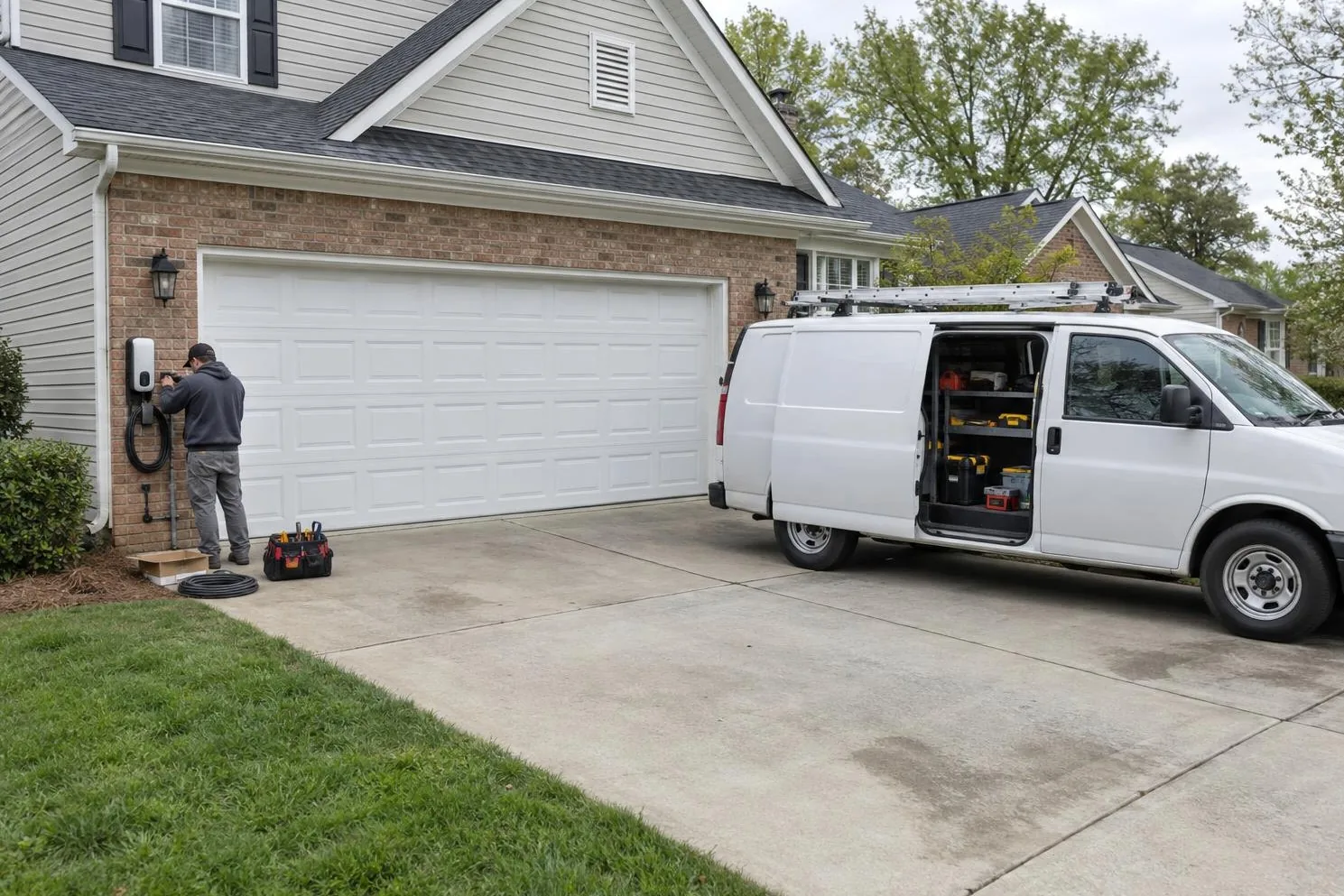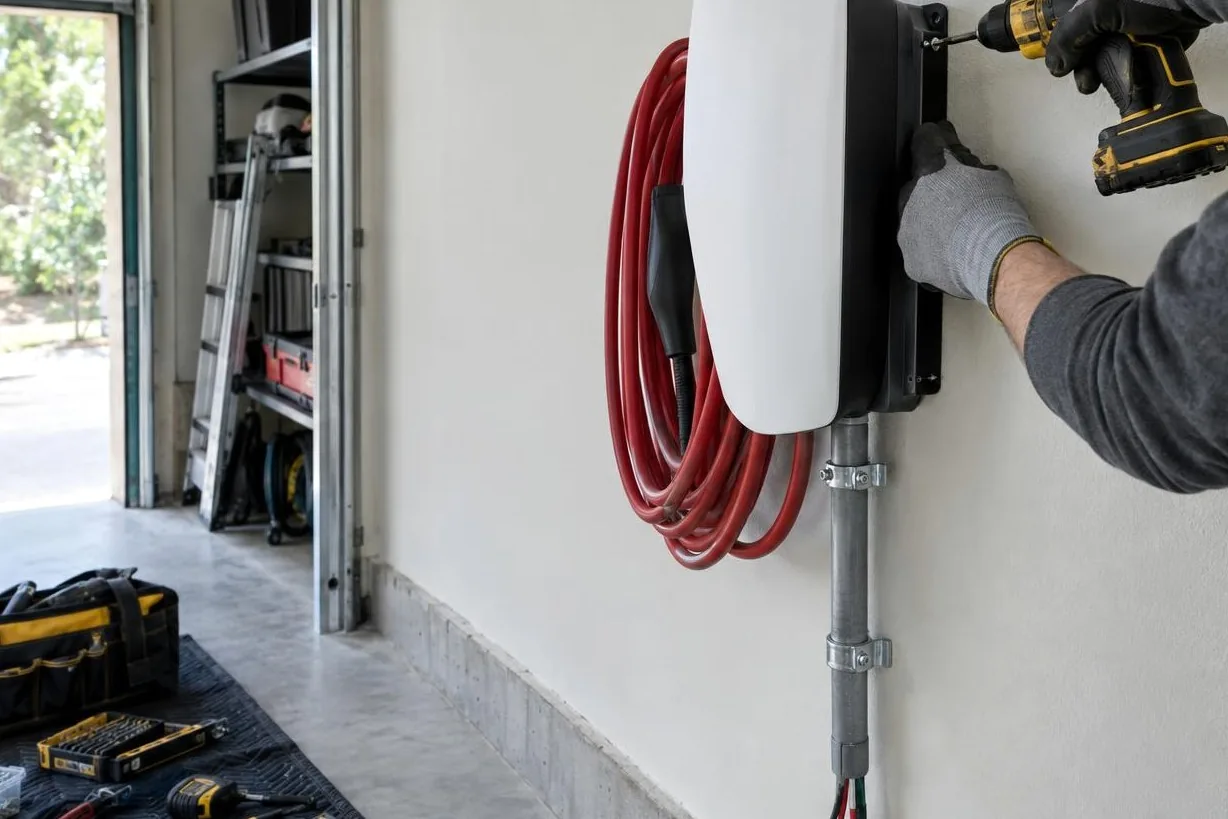
A Tesla Wall Connector needs a 60-amp breaker to charge at its full 48 amps, and that breaker has to feed it alone. The new circuit runs from your panel to a mount beside the parking spot, and the unit joins your home network. The Tesla app then handles charge timing, and the unit downloads its own firmware updates. Most other EVs can charge from it too, either through their own NACS port or with an adapter.
Some Gastonia garages hold two cars with different plugs, such as a Tesla and an older Kia EV6 with a J1772 port. The Universal Wall Connector suits that garage, because it keeps the Tesla plug and adds a built-in J1772 adapter. Two Teslas are a different case. Two Wall Connectors can share one circuit through Tesla's power sharing, which keeps their combined draw inside the breaker's limit.
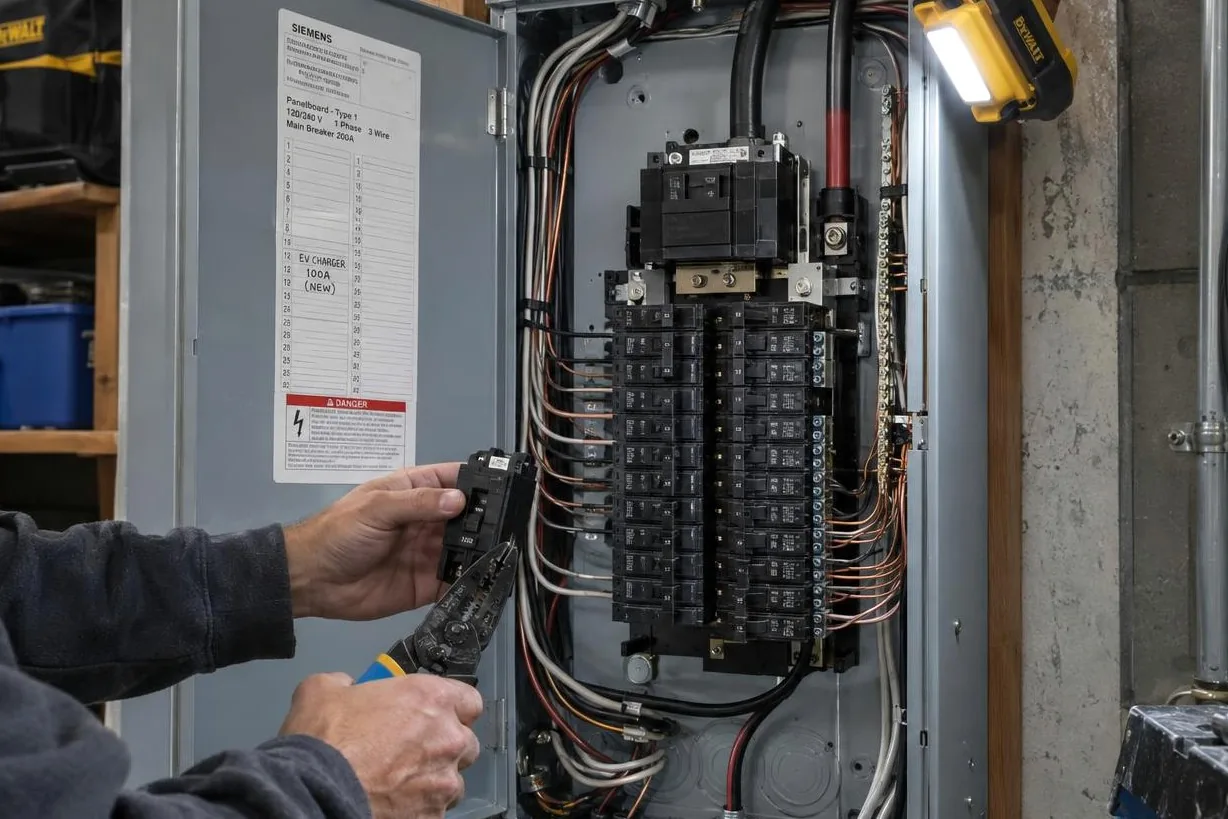
Half of Gastonia's homes were built before 1978, and an older home is the one most likely to have a 100 amp panel. Finding 60 spare amps for a full-speed charger is hard on a panel that size. In many Gastonia jobs, the panel decides the plan more than the charger does.
A load calculation comes first on every panel job. From it we choose the smallest workable fix, whether that is a breaker, load management or a subpanel. Some houses need full 200-amp service, done the same day as the charger unless the utility side has to wait.
Level 2 Charger Installation, Any Make
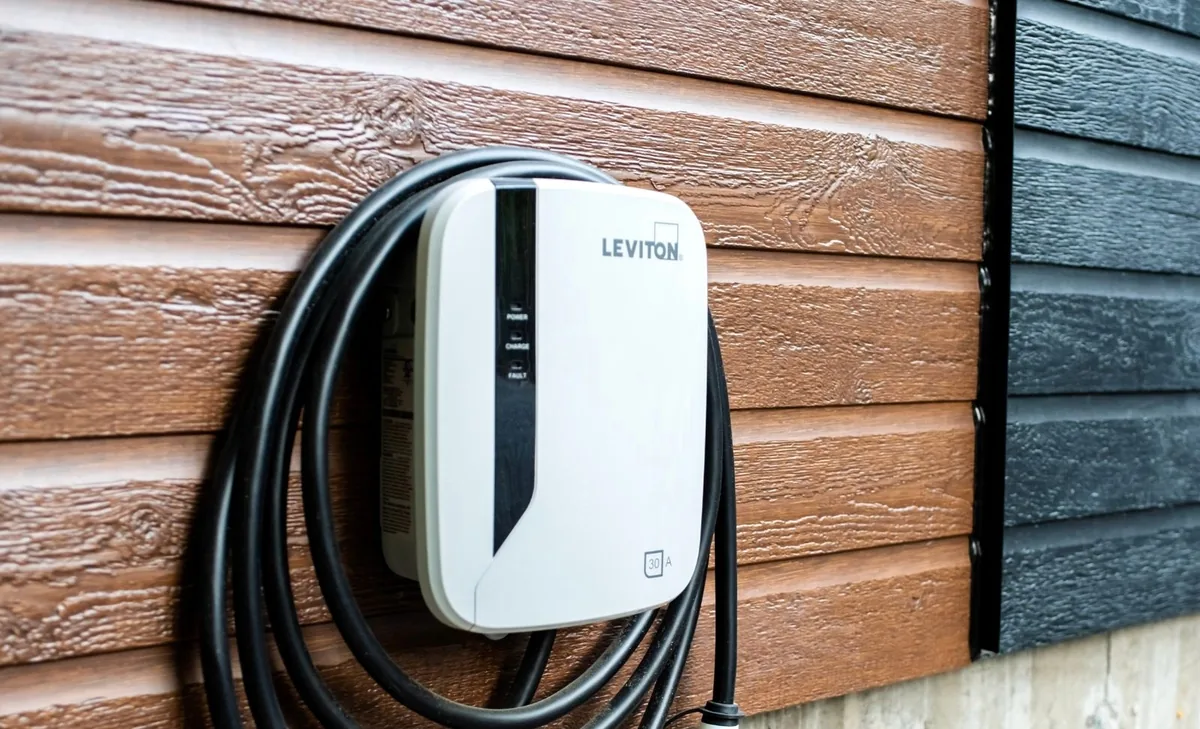
For most Gastonia owners, home EV charger installation means level 2 charger installation, a dedicated 240-volt line to the garage. An hour on Level 2 puts back 10 to 30 miles, where a household outlet manages 2 to 5. For an I-85 commuter, that turns a refill of 9 hours or more into 1.5 to 4.5 hours.
Our charger list runs from JuiceBox and Emporia to ChargePoint, Wallbox, Ford and Rivian units, wired direct or on a plug. On the other end of the cable might be a Kia Niro EV, a Volkswagen ID.4 or a Rivian R1S. Hold off buying until we have seen the panel, so the amperage suits the house and the car.
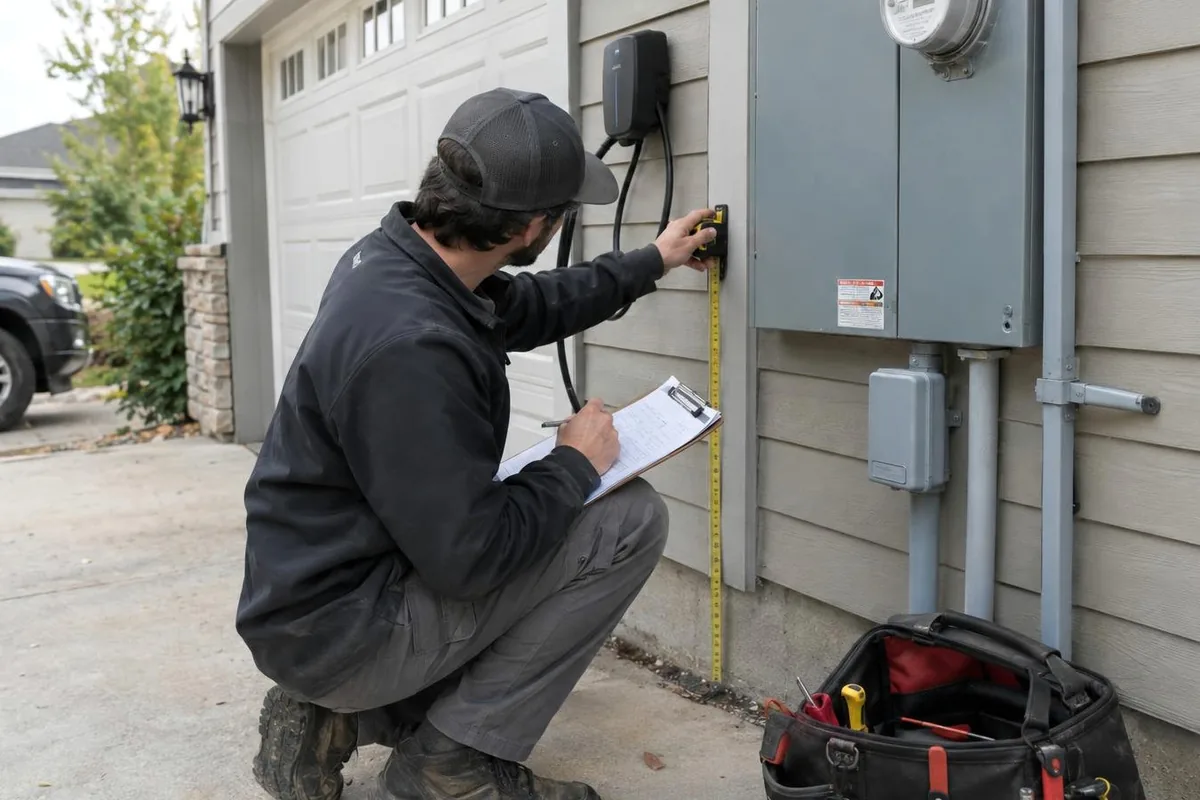
NEMA 14-50 Outlets for Plug-In Chargers
The NEMA 14-50 outlet is the plug-in route, a dedicated 240-volt receptacle for a portable charger or the cord packed with the car. On a tight older panel, a lower-amperage plug-in setup can sometimes avoid an upgrade altogether, which makes it a popular choice in Gastonia's older neighborhoods.
Anything drawing more than 40 amps has to be hardwired, so the outlet route suits smaller chargers. Each receptacle we fit gets a dedicated breaker, never a shared dryer line, and sits within easy reach of the car.
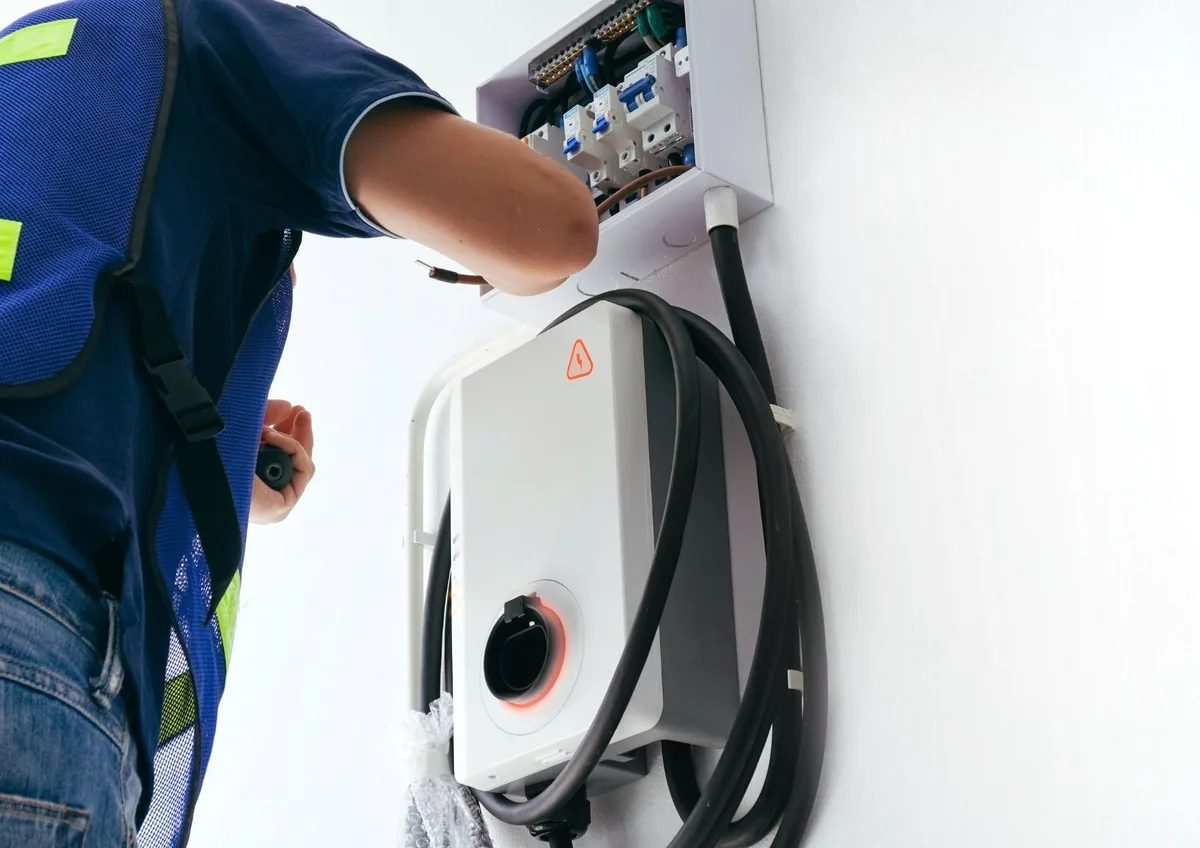
Hardwired Chargers on Exterior Walls
Plenty of Gastonia homes have a carport or no garage at all. A charger on an exterior wall needs a weather-rated unit, plus conduit and wire rated for the outdoors all the way from the panel. A brick wall takes masonry anchors and a little more time to mount than siding does, which we allow for in the quote.
For Duke customers, an outdoor charger still qualifies for the credit when it is fed from the home's own panel. We set the mount so the cable meets the car without crossing a path, and keep the wire run as short as the house allows.
Charging Setups for Two-EV Households
A second EV puts more weight on the panel, which matters in an older Gastonia home. With room in the panel, each charger gets its own circuit. Without it, power sharing or load management lets both cars charge, each a little slower while both are plugged in. On an overnight schedule, both still wake up with plenty of range for the week.
Tesla's power sharing links as many as six Gen 3 units on one breaker. Mixed garages, a Tesla plus another brand, do well with the Universal model on one side.